
Research Environments
The incredible pristine environment within 200KM of Princess Elisabeth Antarctica, provides scientists with a unique opportunity to carry out research on glaciers, mountains, and the Antarctic Plateau.
A Unique Research Environment
Mountain Ranges
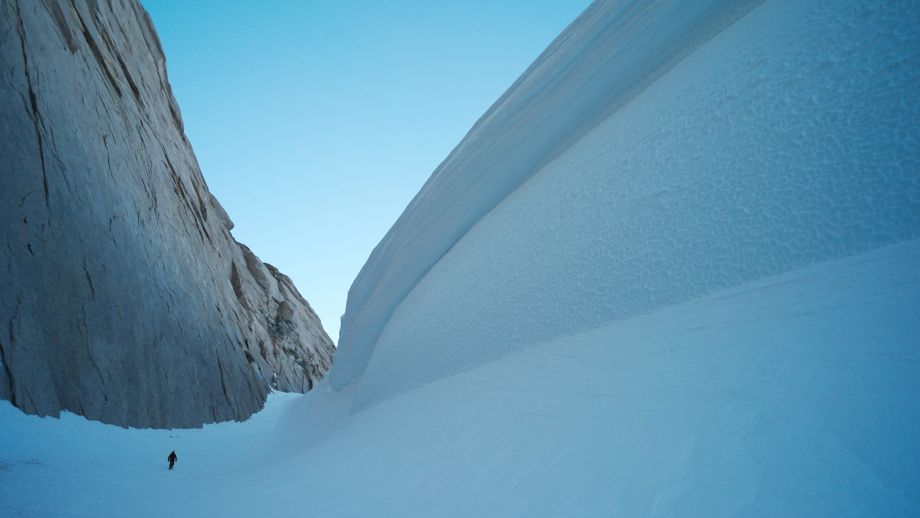
The mountains of East Antarctica are among the continent's three major ranges. While most of Antarctica's mountains are beneath the ice cap, the Sør Rondane mountains soar above the ice, making it an ideal environment for geological studies.
Dry Valleys
The Dry Valleys of Antarctica receive neither snowfall nor other any other kind of moisture or precipitation. Their simple ecosystems are of interest to scientists, along with their unique geological formations and processes occurring there.
Polar Plateau
The Antarctic Plateau covers close to 1000km² and has almost no natural lifeforms. Thanks to its dry conditions and low wind speeds, its ideal for astronomers who want to make observations.
Lakes
Several frozen lakes dot the surface of Antarctica's valleys, some of which are more than 30 meters deep. The lakes are particularly interesting to researchers because of the organisms growing on and in the ice cover, in the water, and on the bottom of the lakes, as well as the algal mats found on the lake floors.
Ice Sheet
The Antarctic Ice Sheet is the Earth's greatest ice mass, containing 90% of the world's freshwater resource. Taking ice cores of this phenomenal ice mass allows palaeoclimatologists to reconstruct the Earth's past climates in an effort to better understand the planet's climate mechanisms.
Ice Shelf
The Antarctic ice shelf is the part of the continent's ice sheet that extends over the ocean, and is not to be confused with sea ice. A key feature is the grounding line, where glaciologists can study the contact point between the ice shelf and the continent at its junction with the ocean.
Coastal Ice Rise
Ice rises are islands covered by a thick layer of grounded ice, it is characterized by a local ice flow protruding above an ice shelf. These islands act like brakes on the ice flow from the ice shelf, which makes for a specific flow regime that is radically different from the rest of the ice shelf.
Fast Ice
Fast ice is an expanse of sea ice that has attached itself to the coast ("fastened" to it) along the shoals, or to the sea floor over shallow parts of the continental shelf, and extends out from land into sea. In Antarctica, fast ice may also extend between grounded icebergs.
Coastal Polynia
Coastal polynya are semi-permanent areas of open water in sea ice which form just beyond grounded ice. The main cause for these to form in Antarctica are the katabatic winds from Antarctica's glaciers.