

A “Zero Emission” Station?
For decades, Antarctica has been a home cutting edge science and a shining example of international governance through collaboration. It was here, in the remote part of the pristine environment, that the International Polar Foundation heralded the return of Belgium to the Antarctic continent with the world's first “zero emission” scientific research station: Princess Elisabeth Antarctica.
Project Background
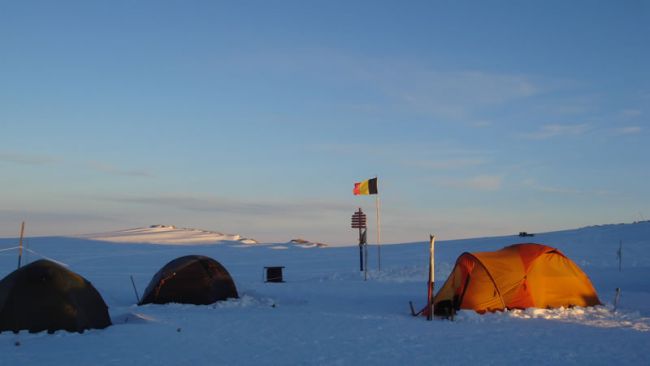
Ever since the days of the days of the Belgica in 1898, Belgium has maintained strong ties to the white continent. An original signatory of the Antarctic Treaty, Belgium went on to build the King Baudouin research station, which closed its doors in 1967.
Four decades later, the International Polar Foundation initiated Belgium's return to Antarctica, by conceiving, designing and building the "zero emission" Princess Elisabeth Antarctica research station, as a legacy project of the 2007-2008 International Polar Year.
Where is Princess Elisabeth Antarctica?
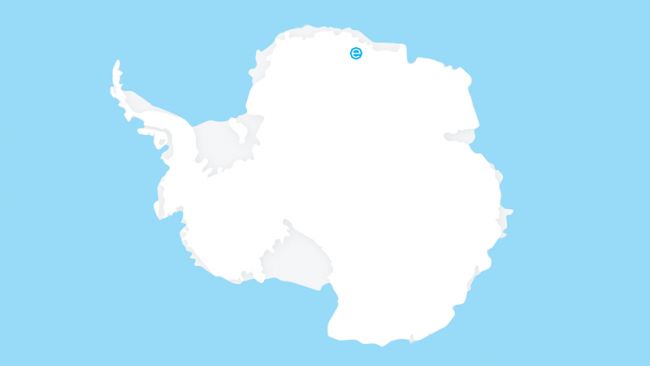
Princess Elisabeth Antarctica is solidly anchored upon the granite ridge of Utsteinen Nunatak, at an altitude is of 1382 metres, in the Dronning Maud Land region of East-Antarctica. The zero emission polar research station, which is approximately 220 Km from the Antarctic coast, is an ideal logistics hub for field exploration in the 20°- 30° E sector of Antarctica.
Integrating Existing Technologies
Passive Building
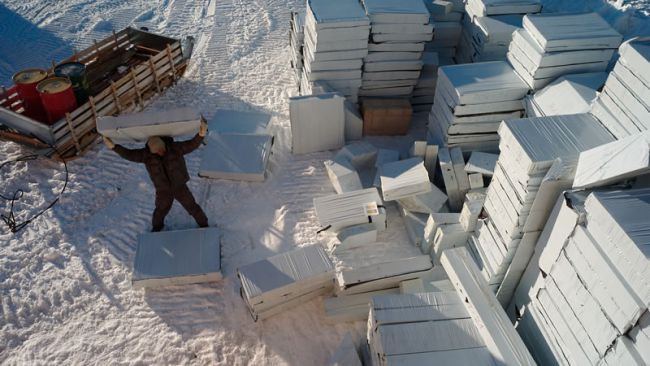
As well as being powered by renewable energy, Princess Elisabeth Antarctica is also designed to minimize energy demand. For example, the station's shell has a layered design, allowing perfect integration of the living quarters, which maximises both heat distribution and energy use.
Renewable Energies
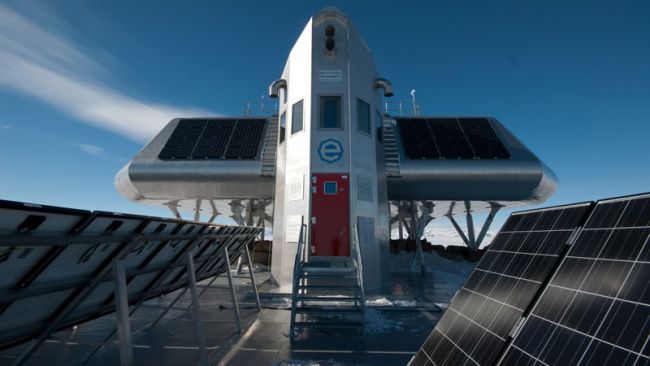
By turning apparent constraints into innovative opportunities, the International Polar Foundation team took advantage of the 24-hour sunshine of the Antarctic summer months and wind gusting from the plateau to provide the station's primary source of power: renewable energy.

Smart Grid
While renewable energies are one way to minimize the ecological impact of an Antarctic station, Princess Elisabeth Antarctica goes further by optimising this energy. Working closely with partners Schneider Electric and GDF Suez (Laborelec), the International Polar Foundation team developed a smart grid that is three times more efficient than any existing conventional energy network.

Water Treatment
Ideally located for obtaining a fresh water supply, Princess Elisabeth Antarctica was designed to use as little as possible of this precious resource. Thanks to a space station-inspired water treatment system, water is purified and re-used for the showers, the toilets, and washing machine. Excess water is thoroughly purified before final disposal in a safe location nearby.
Download Princess Elisabeth Antarctica Brochure - pdf - 3 MB
Facts and Figures
A unique location
Positioned just 200 kilometres from the coast, Princess Elisabeth Antarctica is a gateway to the Sør Rondane Mountains, glaciers and the Antarctic Plateau for scientific projects ranging from microbiology to meteoritics.
Thanks to this unique location, researchers do not need to travel far into Antarctic wilderness to conduct their studies - travel times into the field are minimised.
Challenges and opportunities
Antarctic weather conditions can be harsh; with temperatures ranging between -50°C to -5°C, team members can face serious challenges. However, these cold conditions are not always threats, and in the case of Princess Elisabeth Antarctica, they can prove to be opportunities.
Antarctic katabatic winds, for instance, power the station's wind turbines and provide electricity. The weather does provide challenges however; clearing winter snow accumulation is the Princess Elisabeth Antarctica team's first physical challenge on their arrival to begin the season.
Facilities
Princess Elisabeth Antarctica is designed to withstand the hardships of the Antarctic winter, but is currently occupied during the Austral summer only (November-February) in almost permanent daylight. However, over the course of its projected 25-year lifetime, the station may be used during the Antarctic winter - and the team would face almost 24-hours of darkness a day.
The station has plenty of space (400m² main building and 1,500m² technical areas) and can comfortably accomodate 25 to 40 people.
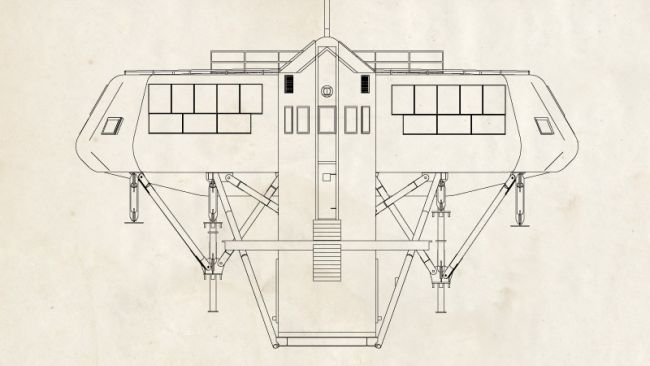
Concept and Design
By taking existing technologies and using them in innovative ways, the International Polar Foundation successfully established Princess Elisabeth Antarctica as a showcase for perfect integration of energy systems. Strong Antarctic wind gusts, a harsh climate, barren landscapes, and the surrounding mountains ... the International Polar Foundation took advantage of all these apparent challenges when designing the station. By harnessing the power of the wind and the 24-hours-a-day sunshine to sustainably fuel the zero emission polar research station, means that it has almost total energy autonomy - and this means a significant cut in the logistical headache of transporting fuel.
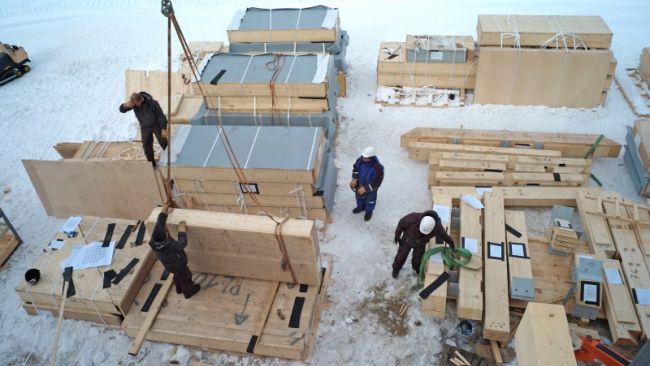
Building the Station
First and foremost a human adventure, the construction of Princess Elisabeth Antarctica has brought its share of personal, logistical and financial challenges.
From conceiving the station, to financing the project, to the actual building phase, the Princess Elisabeth Antarctica project put a highly motivated team to the test, and delivered to them the satisfaction of fulfilling a dream.