Posted in Glaciology
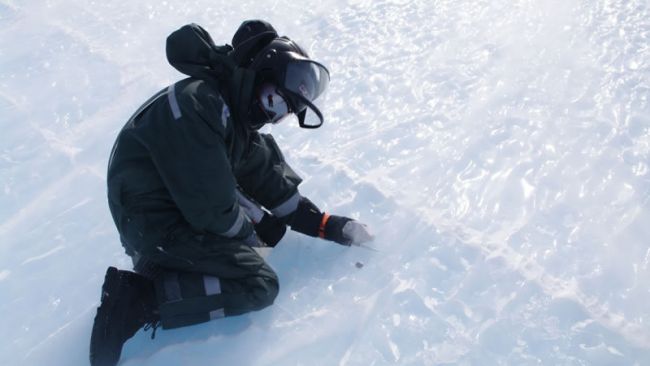
IceCon: Constraining Ice Mass Change in Antarctica
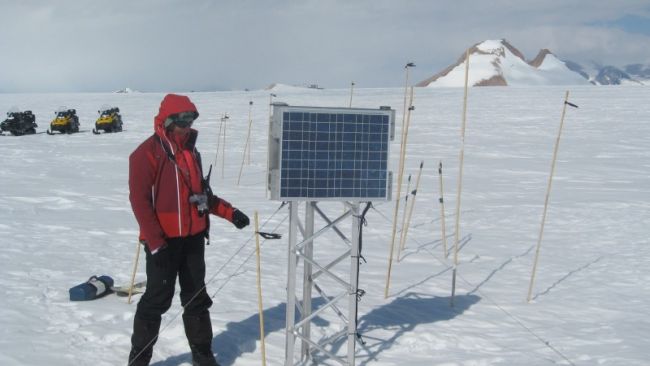
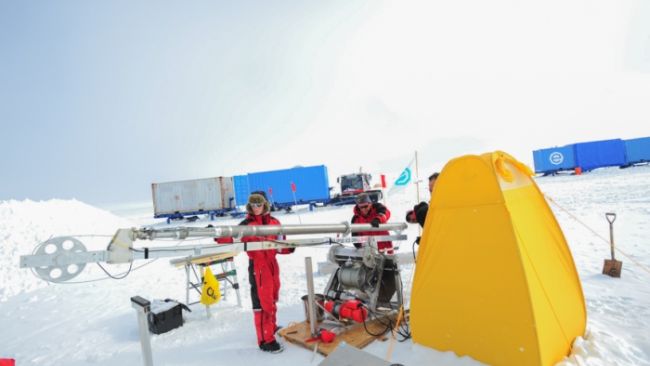
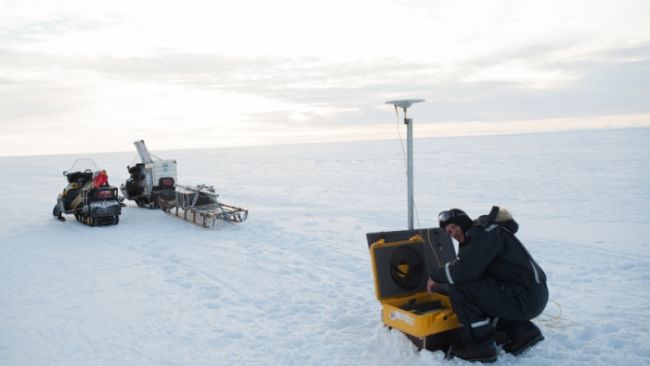
IceCon aims to gain a better understanding of the rate of the loss of ice – now and in the past - from the Antarctic ice sheet in the Dronning Maud Land area.
Princess Elisabeth, like all stations in Antarctica, is a scientific research facility. In this section, you will find a short presentation of all science projects conducted at the station.
Posted in Glaciology
IceCon aims to gain a better understanding of the rate of the loss of ice – now and in the past - from the Antarctic ice sheet in the Dronning Maud Land area.
Posted in Glaciology
The Be:Wise project aims to improve understanding of ice-shelf flow dynamics by focusing on the buttressing role of ice rises and pinning points – small offshore mountains which support Antarctic ice shelves from underneath.
Posted in Geology
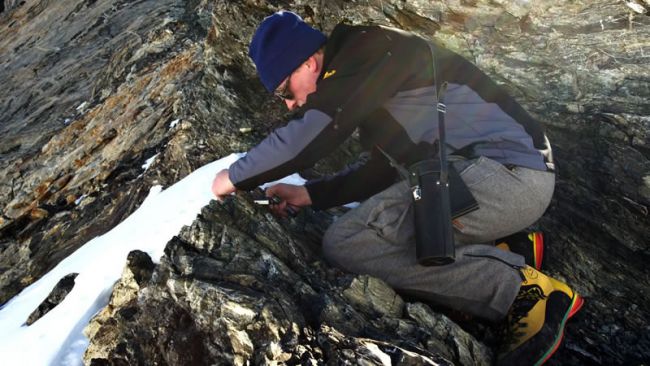
The goal of the ‘Geodynamic Evolution of East Antarctica II' (GEA II) research project was to reconstruct part of the geological history of the Gondwana Supercontinent (which formed between 650 and 500 million years ago and disintegrated about 180 million years ago) ...
Posted in Planetary Science
The SAMBA project is the Belgian contribution to the Search for Antarctic Meteorites. The program is an initiative of the Vrije Universiteit Brussel and the Université Libre de Bruxelles in collaboration with the Japanese Institute of Polar Research in ...
Posted in Biology
The BELDIVA project aims to explore the microbial diversity within a 200 km radius around the Station and observe possible future changes in their diversity due to ecosystem change and human impacts.
Posted in Geomorphology, Glaciology
GIANT-LISSA is an acronym for "Geodesy for Ice in ANTarctica" and "Lithospheric and Intraplate Structure and Seismicity in Antarctica". That project intends on improving scientific knowledge about land mass changes since the last glacial period and climate-related mechanisms, but also ...
Posted in Meteorology
The Belgian BELATMOS project sets out to carry out observations on the composition and chemistry of the atmosphere at the Princess Elisabeth Station. In particular, the aim is to monitor ozone and related trace gases, UV radiation and aerosol ...